Insights on Cultural Destinations
What makes a place worth seeking out? What transforms a single shop or studio into a destination — and a destination into a thriving cultural corridor?
The posts on this page explore exactly that. You’ll find practical insights on the characteristics that define a Cultural Destination, guidance on how to establish one from the ground up, and strategies for growing individual businesses into vibrant corridors and districts that draw visitors, strengthen communities, and build lasting economic value.
We also share perspectives for the institutions, foundations, and local governments that play a vital role in nurturing cultural destinations — from grant-making to placemaking to policy.
Whether you’re a curious visitor, an aspiring business owner, or a community leader, there’s something here for you. Browse freely, learn at your own pace, and when you’re ready — start building your own Cultural Destination.
What if Little Africa Fest Stopped? A $3.8 million Economic Impact
Testimony to MN House Legacy Committee
The news that Little Africa Fest was cancelled this year was deeply disappointing to many. I have attended the festival since its launch 13 years ago and have seen the area come alive with the sounds of African drums, vibrant dance, memorable food, and artists and vendors who bring Africa to a Saint Paul neighborhood.

Little Africa Fest is organized by African Economic Development Solutions, led by the visionary behind the Little Africa Business and Cultural District, Dr. Gene Gelgelu. Spaces like Little Africa are Cultural Destinations—an economic development strategy that integrates art, music, dance, food, and events into commercial spaces to create places where people enjoy culture and entrepreneurs build wealth.
As Planning Director for the City of Saint Paul, I worked with my team in 2019 to establish Cultural Destination Areas. Soon after, Visit Saint Paul developed a map that incorporated these areas into the city’s vibrant neighborhood landscape (see Visit Saint Paul map attached).
This model has significant potential. It brings people together while strengthening local businesses. It differs from a typical ethnic business district or cultural corridor in one important way: it regularly activates space through art, murals, performances, exhibitions, tours, and events. In Little Africa, that meant not only Little Africa Fest, but also walking tours, art exhibitions, music, and business support. Cultural Destinations are commercial spaces fully activated by cultural assets.
That is why the cancellation of Little Africa Fest is serious for Little Africa, Saint Paul, and Minnesota. Its impact is multidimensional:
- Economic: Even using conservative assumptions, Little Africa Fest has generated nearly $4 million in impact over 13 years.
- Fiscal: The Arts & Economic Prosperity 5 Calculator suggests that festival expenses of $150,228 could support about 9 FTE jobs, generate roughly $12,000 in local government revenue, and $14,000 in state government revenue.
- Infrastructure: The festival is essential infrastructure for a culture-based development model. Without it, core elements of the destination are weakened.
- Public Safety – Neighbors experience safety and a sense of shared community.
- Marketing & Branding – Small cultural businesses increase their visibility and markets
- Culture and Belonging: The festival creates joy, cultural affirmation, and a sense of belonging for entrepreneurs, artists, residents, and visitors.
- Reversal of Progress: When AEDS must redirect festival funds to emergency grants for struggling businesses due to fear and instability, the model shifts from celebration and growth back to survival.
The cancellation of Little Africa Fest is more than the loss of an event. It is the weakening of a long-built ecosystem of culture, commerce, and community. There is an urgent need to act to reverse the decline
How to Create a Successful Pop-Up Market: A Guide for Small Business Growth and Community Activation
Pop-up markets are powerful tools for supporting emerging entrepreneurs, increasing foot traffic, and creating vibrant community spaces. Cities like Saint Paul have demonstrated their impact through events like the Little Mekong Night Market, a model for cultural and economic activation.

Step 1: Secure Permits and Licenses
Ensure compliance with city regulations, including business permits, site approvals, and insurance coverage. This protects vendors and organizers while ensuring smooth operations.
Step 2: Choose the Right Location
Select a safe, high-visibility, and accessible space such as a parking lot, public plaza, indoor hall, or a closed street. Location is critical for attracting visitors and vendors.
Step 3: Partner with Community Organizations
Work with local community development corporations (CDCs) or nonprofits to help vendors prepare—ensuring they have insurance, pricing strategies, and operational readiness.
Step 4: Execute a Strong Marketing Strategy
Promote the event through social media, local media, email campaigns, and partnerships. Highlight vendors, cultural experiences, and unique products to drive attendance.
Why Pop-Up Markets Work
- Lower barriers to entry for small businesses
- Test products and markets with minimal risk
- Build community engagement and cultural visibility
- Create pathways to permanent retail opportunities
Recommendations
- Add live music, food, and cultural programming for experience-driven visits
- Use QR codes for vendor promotion and digital sales
- Develop recurring pop-up schedules to build momentum
- Position markets as part of a broader Cultural Destination strategy
How Government and Funders Build Cultural Destinations: A Proven Economic Development Framework
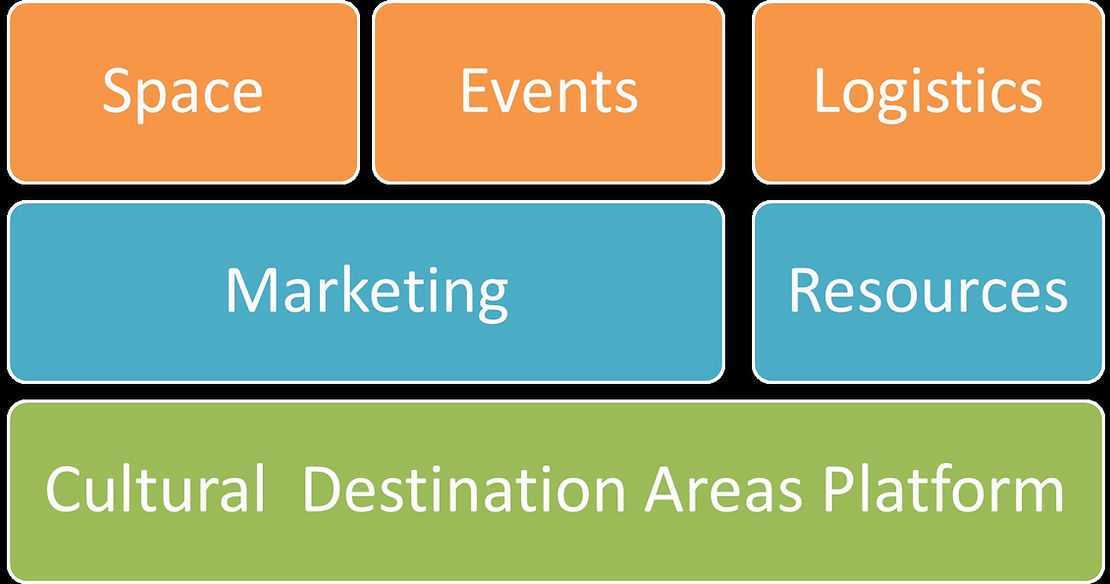
Public sector leadership is essential in developing cultural destinations in underserved communities. In Saint Paul, the Department of Planning and Economic Development, working with community partners, created a replicable Cultural Destinations Resource Platform to drive inclusive growth.
Key Elements of the Cultural Destinations Platform
1. Space (Infrastructure for Cultural Activation)
Cities can unlock underutilized spaces through partnerships. For example, Saint Paul collaborated with Allianz Field to create vendor opportunities for cultural food entrepreneurs serving large event audiences.
2. Events (Driving Foot Traffic and Cultural Tourism)
Signature events like Little Mekong Night Market, Little Africa Fest, and Rondo Days activate neighborhoods and generate economic impact.
3. Logistics (Capacity Building Support)
Many community organizations lack operational capacity. City staff can provide coordination, permitting assistance, and technical support to enable participation.
4. Marketing (Visibility and Destination Branding)
Strategic partnerships with tourism entities like Visit Saint Paul ensure cultural destinations are promoted through citywide campaigns, maps, and digital tools.
5. Resources (Funding and Technical Assistance)
Public investment is critical. Saint Paul deployed nearly $1.5 million in grants and loans, alongside zoning and planning assistance, to support small businesses and cultural projects.
Why This Model Works
Creates sustainable, inclusive growth ecosystems
Expands economic opportunity in low-income communities
Strengthens small businesses and local ownership
Builds cultural tourism and place-based identity
How to Build a Cultural Corridor: A Step-by-Step Guide for Economic Development and Placemaking
A cultural corridor transforms a street or district into a destination by aligning businesses, design, and cultural experiences. Cities like Minneapolis demonstrate how corridors such as Lake Street can become thriving hubs of culture, commerce, and community.

Step 1: Align Businesses Around a Shared Vision
Successful cultural corridors begin with business owners agreeing to participate in a unified branding and cultural identity strategy. This creates consistency and collective impact.
Step 2: Establish Design Standards
Develop cohesive guidelines for storefronts, signage, lighting, and public art. Strong visual identity enhances walkability, recognition, and tourism appeal.
Step 3: Convert Businesses into Cultural Destinations
Support businesses in integrating cultural elements—food, music, art, and events—while maintaining a safe and welcoming environment. This turns individual businesses into experiential anchors.
Step 4: Partner with Community Development Organizations
Collaborate with local CDCs to ensure compliance with zoning, permits, and city regulations while aligning with broader economic development goals.
Step 5: Secure Funding and Investment
Leverage city, state, and philanthropic funding to support façade improvements, programming, and marketing. Public-private partnerships are critical.
Example: Lake Street Latino Cultural Corridor
A section of Lake Street illustrates how Latino-owned businesses, cultural expression, and coordinated development create a vibrant corridor that attracts visitors and strengthens the local economy.
Recommendations
- Activate the corridor with regular events and festivals
- Use digital platforms to promote businesses collectively
- Develop year-round programming to sustain foot traffic
- Position the corridor as a regional cultural tourism asset