Seven Ways Cultural Destinations Transform the Economy and Community
ALANA (African American Latino Asian and Native American) Cultural Destinations are vibrant spaces where one can enjoy an authentic ethnic cultural experience while growing the local economy. Think of walking into an ethnic restaurant and seeing murals on the wall, music from that culture and new food to experience. As you eat you hear multiple languages and see diverse people. At times, you might hear ethnic musicians play delightful tunes as you eat. For a moment you are in another world capturing that far away experience right in your neighborhood. That is a Cultural Destination. The development of ethnic Cultural Destinations is a very powerful strategy based on Joy – customers enjoy, the business owner shares, and together build wealth and community. When we break bread together it opens new doors to deeper relationships with others.

The Dynamic Potential of Cultural Destinations
Cultural Destinations are powerful cultural spaces that can benefit everyone – people seeking a global experience in their local neighborhoods, people seeking to learn and understand a different culture, people building their cultural intelligence and cultural relationships, and entrepreneurs seeking to build wealth through their cultural treasures. It is a very powerful space because it builds the individual while serving the community.
In Saint Paul the construction of the Green Line spurred the development of these Cultural Destinations as the community came together to ensure that the harmful displacement that tore the African American community apart through the construction of the freeway, I 94, would not occur again. Little Mekong, Rondo and Little Africa began to take shape as business and cultural districts adding to cultural destinations in Frogtown and District Del Sol. The Intertribal Cultural Corridor emerged in recent years building on the cultural assets of the Native American and immigrant communities of the Eastside of Saint Paul. In Minneapolis one can find cultural destinations in the American Indian Cultural Corridor, the Cedar Riverside neighborhood, Central Avenue, 38th Street, Lake Street, and Broadway. Other areas in the metro one can find cultural destinations are in the Brooklyns, Burnsville, Eden Prairie and Maple Grove. In Greater Minnesota we find Cultural Destinations in Rochester, Willmar, Saint Cloud, Duluth, Worthington and Moorhead and in many smaller towns (See www.culturaldestinations.org for virtual tours of these cultural destinations).
A cultural destination can take many forms – a cultural corridor, a cultural node of a block or a two to three blocks, or a larger geographical area of many blocks taking legal shape as a business or cultural district.
There are 7 core elements of a Cultural Destination
First, it celebrates the value added by our ALANA communities to their local economy and community. This value is expressed through the vibrancy of ALANA cultural assets building wealth. The economic value of the ALANA communities to Minnesota is estimated to be at least $1.4 trillion dollars. Each of the ALANA communities adds value to the local and national economy in various ways. For example, African American workers in Minnesota, help produce $58 billion in goods and services in Minnesota, support over 300,000 jobs and $7.5 billion in taxes and accounted for 35 percent of the growth in the labor force between 2010-2020.
Nationally, for example, the Asian Indian community have income larger than the economy of Arkansas and 18 other states. These estimates document the fact that ALANA people offer great value to their local community and the power of Cultural Destinations as economic engines of growth.
The second element of Cultural Destinations is that they celebrate the cultural assets of the local ALANA community. This strategy pivots from the experience of racism which denied the value of the ALANA people and their cultural assets, to one where ALANA cultural assets are foundational to wealth and community building. At the Little Mekong Night Market or Little Africa Fest or the Rondo Parade in the University Avenue area one can experience the exuberance of ALANA cultural assets and people actively and authentically “enjoying cultures.” “I am excited to my African culture celebrated in the heart of Saint Paul,” is a common reaction Little Africa visionary, Dr. Gene Gelgelu, receives in the community.
The third element of a Cultural Destination is that it offers a space for cultural placemaking – how cultural assets facilitate the building of meaningful relationships between people and build community cohesion in vibrant ways.
Recently, with a small grant from the Legacy Funds and the Minnesota Humanities Center, we hosted three Cultural Placemaking events at beautiful Cultural Destinations in Saint Paul, Eden Prairie, and Saint Joseph around cultural breads. At Eden Prairie a small group of people learned about Indian Naan and experienced the way the owners of Pizza Karma, Dr. Subashini, Mahi and Raj, transform the Naan into a new, flavorful, and healthier pizza. At Krewe in Saint Joseph, Chefs Mateo and Erin shared their version of the traditional New Orleans African American bread pudding in their New Orleans themed farm to fork restaurant. At Agelgil, owners Tsegerada Cherinat and Konjit Kidane, shared the details about Ethiopian Injera and how it could be enjoyed with various delicious dishes and traditional Ethiopian coffee. In each of these events, strangers began the journey of friendship while enjoying cultures in a vibrant cultural environment involving music, art, and cuisine.
The fourth element of a Cultural Destination is that it offers an opportunity to build cultural intelligence – the intelligence needed to engage effectively with someone from a different culture. As one visits a cultural destination, sample a new food, and experience the music and art of the destination, we become more familiar and comfortable with the new culture, and it draws us to delve deeper to establish meaningful relationships with people and organizations from that culture.
The fifth element of a Cultural Destination is that it offers a “human” space to engage with the other as a person. We discover common threads that connect us – for example, we all eat bread in some form or the other. Discovery of such common bonds between diverse people is the social glue that binds us together as a community.
The sixth element of a Cultural Destination is that it builds wealth in the local community. The business receives revenue, hires workers, buys supplies, pays taxes and serves as an anchor institution in that neighborhood or community. For example, the activities of Little Mekong had an estimated impact of $6 million in additional revenue for the local businesses. Local artists play an important role in this process through their talents and become in effect as Little Mekong visonary Va-Megn Thoj calls them, “community developers.”
The seventh element of a Cultural Destination is that it is a win-win strategy. ALANA communities are energized through the celebration of their cultural assets and at the same time it builds wealth in these communities. People who visit the cultural destinations gain a global experience enjoying cultures and building cultural intelligence. Artists and others involved in the creative economy have their talents and skills leveraged in a unique way. Cultural Destinations can stop the progress of gentrification by keeping wealth and ownership of assets within the local community. Local communities can benefit from cultural heritage tourism bringing visitors to the area.
Resources for Business and Organizations to build cultural intelligence through Cultural Destinations.
Businesses or organizations seeking to build cultural intelligence and relationships both within their organization and with their customers and stakeholders, Cultural Destinations offers a new and attractive strategy.
Here are some examples of how experiences with cultural destinations can help build cultural intelligence in a business and organization.
· The website, www.culturaldestinations.org offers some resources to help you enjoy cultures at Cultural Destinations. There are virtual tours of cultural malls, cultural museums, cultural destinations across Minnesota and nationally and globally. Then get in your car and visit these cultural destinations.
Cultural Destinations – Minnesota – https://www.culturaldestinations.org/minnesota
Cultural Malls – Minnesota – https://www.culturaldestinations.org/culturalmalls
Small teams from a business or organization could take a “walking tour” of a cultural destination. For example, AEDS takes students from Concordia University every year for a walking tour through Little Africa, where they learn about its history and development and sample African food.
Walking Tour Little Africa – https://www.culturaldestinations.org/littleafricatour
The Minnesota Humanities Center has pioneered immersion experiences that include Cultural Destinations in Little Africa and Hmong Town.

Hmong Town Immersion Experience – https://www.mnhum.org/event/learning-in-community-hmong-st-paul/
Let’s Break Bread – a strategy of Cultural Destinations, LLC, offers community building through experiencing cultural breads. This could be done at your business or organization or at a cultural destination. People learn the history and culture around the bread, learn how it is made and eaten, sample the bread, engage in conversations with others.
Let’s Break Bread – https://www.culturaldestinations.org/breakingbread
Minnesota as a Global Destination
As we support and develop ALANA cultural destinations across Minnesota, our state will emerge as a Global Destination, where one can experience the rich cultural experiences of the world right here in our neighborhood.
At the Minnesota State Fair this year, the million plus people who attend the fair will have the opportunity to experience cultural destinations from across the state at the Cultural Destinations booth in the Education Building. Visitors to the booth, will learn how to enjoy a cultural dish, gift ideas from our many cultural malls, culturally inspired fashion and the vibrancy of our cultural artists and media.
How to Create a Successful Pop-Up Market: A Guide for Small Business Growth and Community Activation
Pop-up markets are powerful tools for supporting emerging entrepreneurs, increasing foot traffic, and creating vibrant community spaces. Cities like Saint Paul have demonstrated their impact through events like the Little Mekong Night Market, a model for cultural and economic activation.

Step 1: Secure Permits and Licenses
Ensure compliance with city regulations, including business permits, site approvals, and insurance coverage. This protects vendors and organizers while ensuring smooth operations.
Step 2: Choose the Right Location
Select a safe, high-visibility, and accessible space such as a parking lot, public plaza, indoor hall, or a closed street. Location is critical for attracting visitors and vendors.
Step 3: Partner with Community Organizations
Work with local community development corporations (CDCs) or nonprofits to help vendors prepare—ensuring they have insurance, pricing strategies, and operational readiness.
Step 4: Execute a Strong Marketing Strategy
Promote the event through social media, local media, email campaigns, and partnerships. Highlight vendors, cultural experiences, and unique products to drive attendance.
Why Pop-Up Markets Work
- Lower barriers to entry for small businesses
- Test products and markets with minimal risk
- Build community engagement and cultural visibility
- Create pathways to permanent retail opportunities
Recommendations
- Add live music, food, and cultural programming for experience-driven visits
- Use QR codes for vendor promotion and digital sales
- Develop recurring pop-up schedules to build momentum
- Position markets as part of a broader Cultural Destination strategy
How Government and Funders Build Cultural Destinations: A Proven Economic Development Framework
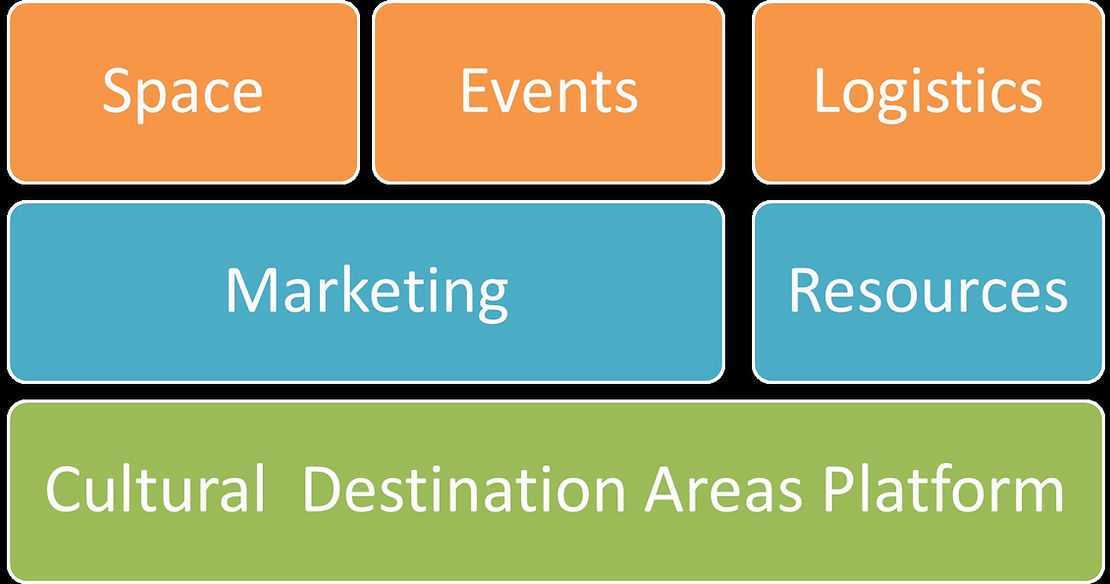
Public sector leadership is essential in developing cultural destinations in underserved communities. In Saint Paul, the Department of Planning and Economic Development, working with community partners, created a replicable Cultural Destinations Resource Platform to drive inclusive growth.
Key Elements of the Cultural Destinations Platform
1. Space (Infrastructure for Cultural Activation)
Cities can unlock underutilized spaces through partnerships. For example, Saint Paul collaborated with Allianz Field to create vendor opportunities for cultural food entrepreneurs serving large event audiences.
2. Events (Driving Foot Traffic and Cultural Tourism)
Signature events like Little Mekong Night Market, Little Africa Fest, and Rondo Days activate neighborhoods and generate economic impact.
3. Logistics (Capacity Building Support)
Many community organizations lack operational capacity. City staff can provide coordination, permitting assistance, and technical support to enable participation.
4. Marketing (Visibility and Destination Branding)
Strategic partnerships with tourism entities like Visit Saint Paul ensure cultural destinations are promoted through citywide campaigns, maps, and digital tools.
5. Resources (Funding and Technical Assistance)
Public investment is critical. Saint Paul deployed nearly $1.5 million in grants and loans, alongside zoning and planning assistance, to support small businesses and cultural projects.
Why This Model Works
Creates sustainable, inclusive growth ecosystems
Expands economic opportunity in low-income communities
Strengthens small businesses and local ownership
Builds cultural tourism and place-based identity
How to Build a Cultural Corridor: A Step-by-Step Guide for Economic Development and Placemaking
A cultural corridor transforms a street or district into a destination by aligning businesses, design, and cultural experiences. Cities like Minneapolis demonstrate how corridors such as Lake Street can become thriving hubs of culture, commerce, and community.

Step 1: Align Businesses Around a Shared Vision
Successful cultural corridors begin with business owners agreeing to participate in a unified branding and cultural identity strategy. This creates consistency and collective impact.
Step 2: Establish Design Standards
Develop cohesive guidelines for storefronts, signage, lighting, and public art. Strong visual identity enhances walkability, recognition, and tourism appeal.
Step 3: Convert Businesses into Cultural Destinations
Support businesses in integrating cultural elements—food, music, art, and events—while maintaining a safe and welcoming environment. This turns individual businesses into experiential anchors.
Step 4: Partner with Community Development Organizations
Collaborate with local CDCs to ensure compliance with zoning, permits, and city regulations while aligning with broader economic development goals.
Step 5: Secure Funding and Investment
Leverage city, state, and philanthropic funding to support façade improvements, programming, and marketing. Public-private partnerships are critical.
Example: Lake Street Latino Cultural Corridor
A section of Lake Street illustrates how Latino-owned businesses, cultural expression, and coordinated development create a vibrant corridor that attracts visitors and strengthens the local economy.
Recommendations
- Activate the corridor with regular events and festivals
- Use digital platforms to promote businesses collectively
- Develop year-round programming to sustain foot traffic
- Position the corridor as a regional cultural tourism asset
Transforming a Business into a Cultural Destination
Converting a Business into a Cultural Destination
- Bruce Corrie
Businesses today need more than products—they need experiences. A Cultural Destination business model integrates art, music, food, and storytelling to create a space where customers connect, share, and return.
Step 1: Create a Welcoming and Inclusive Space
The foundation of a Cultural Destination is a safe, inviting environment where every customer feels they belong. This enhances customer experience and increases repeat visits.
Step 2: Integrate Culture into the Business Experience
Add elements like live or ambient music, cultural art, murals, and authentic food. These features create a unique identity and differentiate your business in competitive markets.
Step 3: Design for Social Media and Customer Sharing
High-quality products and visually engaging spaces encourage customers to post on platforms like Instagram, boosting organic marketing and brand visibility.
Real Example: Snelling Cafe Transformation
In Saint Paul, Snelling Cafe partnered with African Economic Development Solutions and Little Africa, along with artist Sara Endlaw, to transform a coffee shop into a vibrant cultural art gallery at minimal cost. The space became a community hub, even hosting events led by Melvin Carter.

Why This Strategy Works
- Drives foot traffic and longer customer stays
- Increases revenue through experience-based consumption
- Builds brand identity and loyalty
- Supports local artists and cultural entrepreneurs
Recommendations
Position your business as a “destination,” not just a storefront
Start with small cultural elements and scale gradually
Partner with local artists and community organizations
Host events to activate the space regularly
Cultural Entrepreneurs from Across the Metro Begin Training to Sell at the Minnesota State Fair
The Cultural Destination Boutique launches its first business incubator training session, preparing small business owners to reach one of the largest markets in the Midwest.

The Cultural Destination Boutique has launched its inaugural training series for entrepreneurs selected from across the Twin Cities metro area. The program is designed to support small business owners seeking to sell at the Minnesota State Fair, offering a three-session curriculum focused on best practices for reaching one of the largest markets in the Midwest and the nation.
During the first session, participants practiced a one-minute business pitch, explored strategies for marketing and pricing, and drew on each other’s expertise in a collaborative learning environment. The cohort-based format encourages peer knowledge sharing alongside structured instruction.
“What makes the Cultural Destinations Boutique unique is we don’t just sell products — we offer a space where the entrepreneur and the customer engage in joy and at the same time build wealth and community.”
— Dr. Bruce Corrie, Co-Creator, Cultural Destinations
85% of all sales revenue goes directly back to the entrepreneur — reflecting the boutique’s core commitment to wealth-building in cultural communities.
The boutique is organized into three distinct sections to serve a range of cultural products and experiences:
Global Fashion & Jewelry
Global Pantry
Cultural Gifts
Support for participating entrepreneurs is made possible through a network of Community Development Financial Institution (CDFI) partners committed to economic equity across the region:
African Economic Development Solutions (AEDS)
African Career and Education Resources (ACER)
Hmong American Partnership (HAP)
WomenVenture
Two additional training sessions remain in the series. In the coming weeks, the Cultural Destination Boutique will feature profiles of each participating business, highlighting the diverse entrepreneurs and products that will be represented at the fair. The boutique deeply appreciates the support of the Minnesota State Fair and its placement within the International Bazaar.
About the Cultural Destination Boutique
The Cultural Destination Boutique is a business incubator dedicated to supporting small, culturally-rooted businesses in reaching new markets. Located within the International Bazaar at the Minnesota State Fair, the boutique provides training, mentorship, and a platform for entrepreneurs from across the metro region. Eighty-five percent of sales revenue goes directly to entrepreneurs, made possible through partnerships with leading CDFI organizations across the Twin Cities.
For more information contact corrie@culturaldestinations.org